A kitchen can have plenty of cabinets and still feel short on storage. Pots end up stacked behind one another, food disappears into deep pantry shelves, and small appliances take over the counter. Often, the problem comes down to where things are stored and how easily you can reach them.
Before choosing cabinet colors or door styles, consider what your kitchen needs to hold. Planning storage early gives every cabinet a purpose and helps you avoid repeating the frustrations of your current layout.
If you’re planning a kitchen update in North Kingstown, Wickford Kitchen & Bath offers kitchen and bath design services that bring cabinetry, storage planning, countertops, and hardware together. Schedule a design consultation to discuss what could work better in your space.
Start Your Kitchen Storage Plan With What You Already Own
Open your cabinets and take a look at what’s inside before deciding how many new ones you need. A useful storage plan starts with the items you actually use.
Separate everyday essentials from things you only bring out occasionally. Plates, coffee mugs, cookware, and lunch containers should be easy to reach. Holiday serving dishes and specialty baking equipment can go in less accessible spots.
Pay attention to items that never seem to have a home:
Measure unusually tall or bulky items. Knowing the size of your stockpot or mixer gives your designer something concrete to plan around.
Put Storage Near the Task
Think through a normal evening in your kitchen. Where do you unload groceries? Where do you chop vegetables? What happens when someone opens the dishwasher while another person is cooking?
Storage works best when it supports those routines.
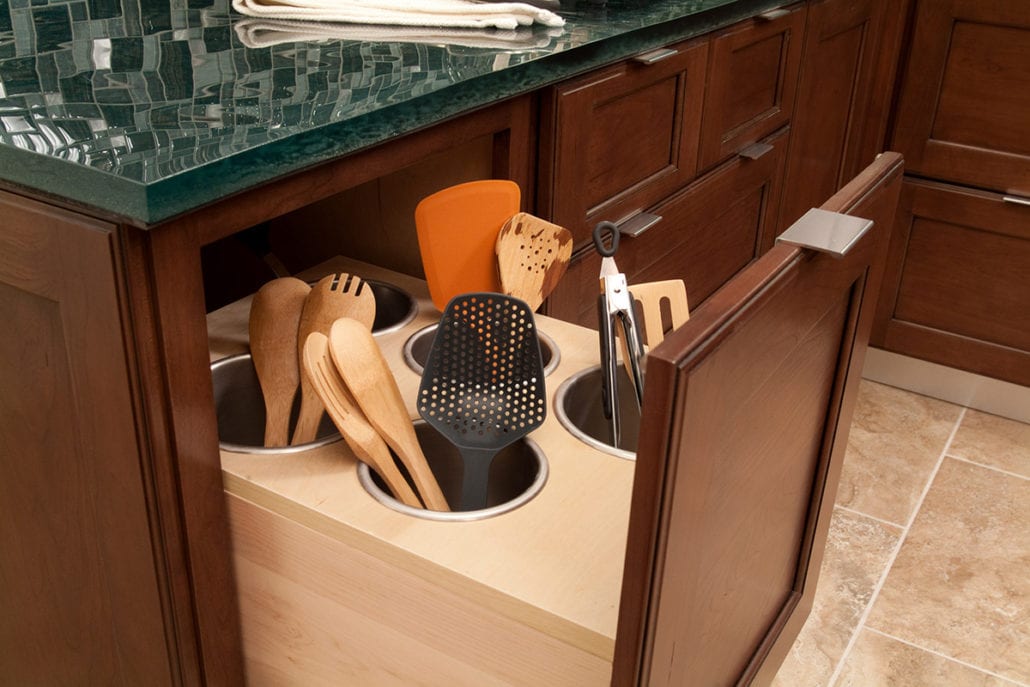
Keep cooking utensils and frequently used cookware near the range. Place knives, cutting boards, and mixing bowls close to your main preparation area. Store plates and glasses where unloading the dishwasher feels convenient.
A coffee area can also help organize a busy kitchen. Keeping mugs, coffee supplies, and the coffee maker together can reduce the need to cross the room several times during breakfast.
These choices may seem small on paper, but they affect how the kitchen feels every day.
Compare Drawers and Shelves Before Finalizing Base Cabinets
Standard shelves are useful for some items, but deep lower cabinets can make it difficult to reach things at the back. Drawers bring the contents out toward you and make it easier to see what you have.
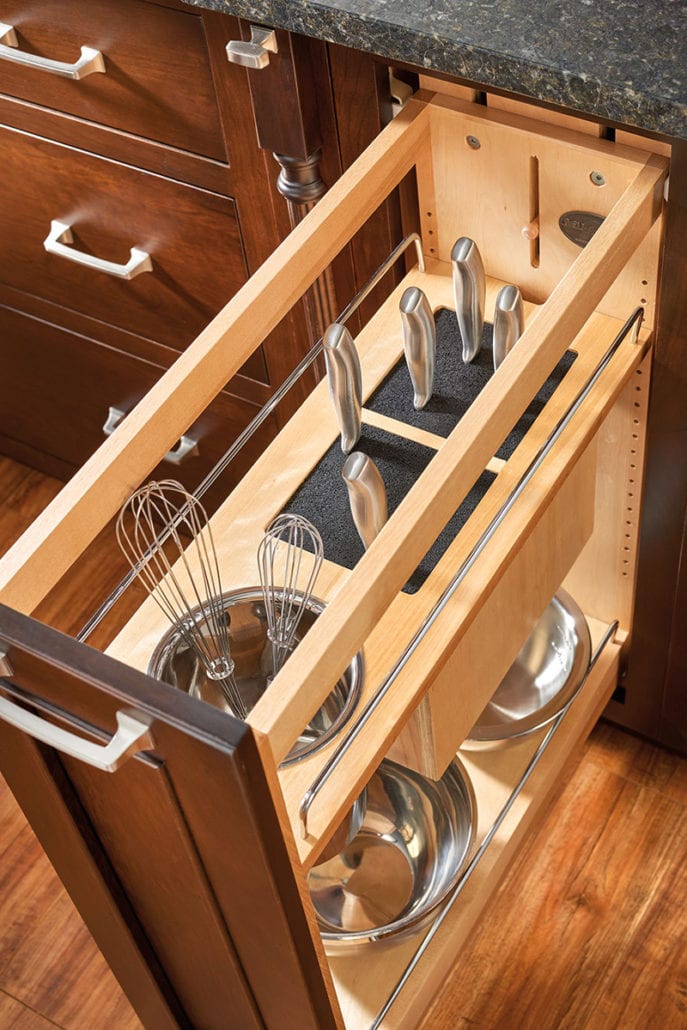
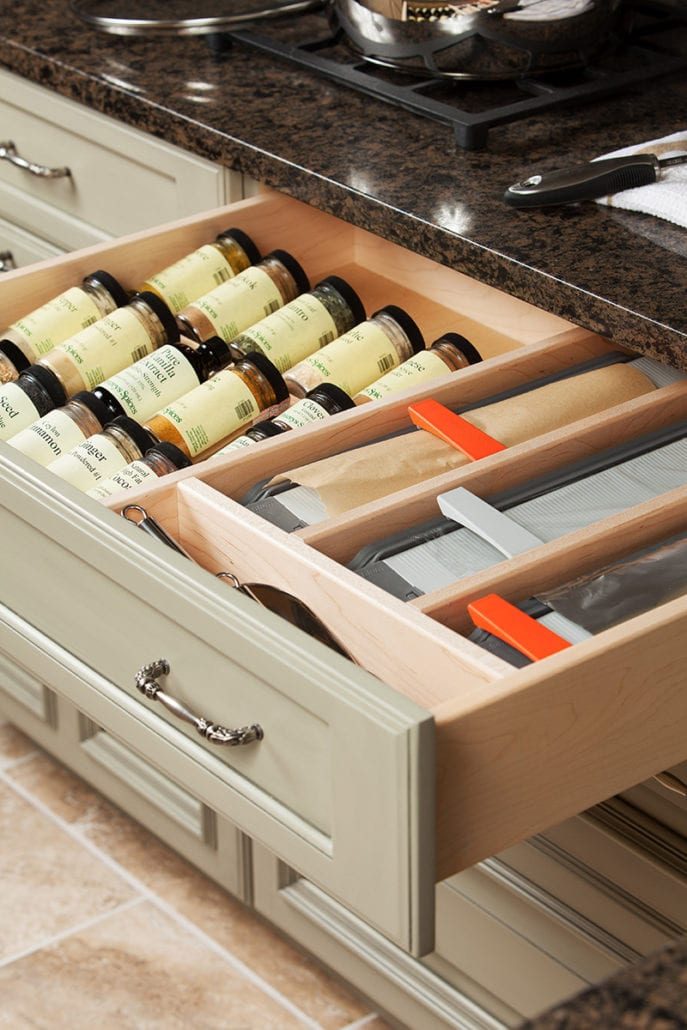
Consider deeper drawers for pots, pans, and mixing bowls. Shallower drawers can hold utensils, wraps, or everyday tools. Vertical dividers may make sense for baking sheets and cutting boards that otherwise end up in a stack.
The right combination depends on your belongings and preferences. A kitchen with lots of baking equipment may need a different arrangement from one used mainly for quick meals.
When comparing options, ask to see how the storage works in person. Open the drawers, try the pull-outs, and think about loading them with your own kitchen items.
Give Pantry Storage a Clear Purpose
A tall pantry cabinet can hold a lot, but its interior arrangement matters. Deep shelves may leave smaller packages hidden behind larger ones, making it harder to keep track of what needs replacing.
Think about grouping pantry items by use. Breakfast foods, baking supplies, snacks, and dinner ingredients can each have a designated area.
Adjustable shelving gives you flexibility for different package heights. Pull-out storage can improve access to deeper spaces. Before selecting either, consider the usable interior dimensions and how much room the hardware takes up.
Wickford Kitchen & Bath offers cabinet organization systems, including pull-out shelving, drawer dividers, and pantry systems that can be planned alongside the cabinetry.
Be Selective About What Stays on the Counter
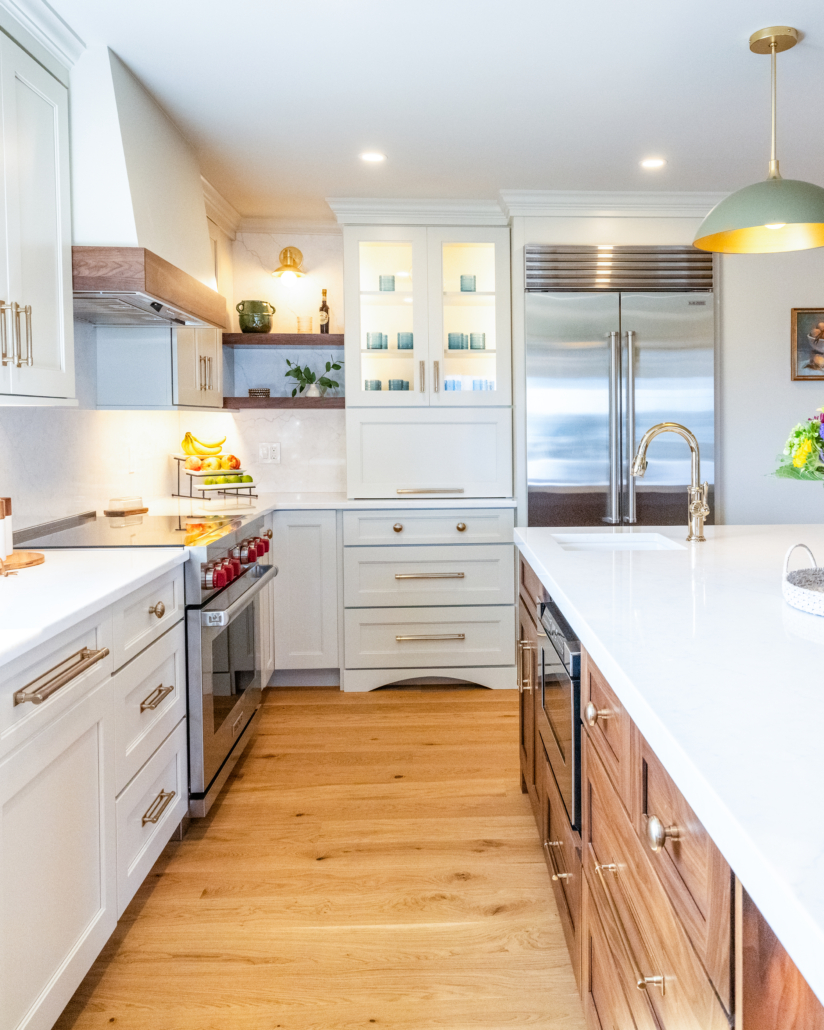
You don’t need to hide every appliance to have an organized kitchen. A coffee maker used twice a day may deserve a permanent spot. A slow cooker used once a month probably needs cabinet storage.
Decide which appliances should remain accessible before finalizing the layout. This helps preserve counter space for preparing meals and setting down groceries.
For heavier appliances, consider whether you’re comfortable lifting them from the proposed storage location. A cabinet that technically fits an appliance may still be inconvenient if retrieving it is awkward.
Bring these concerns into the design conversation so the plan reflects how you’ll use the space.
Plan Around the Room You Have
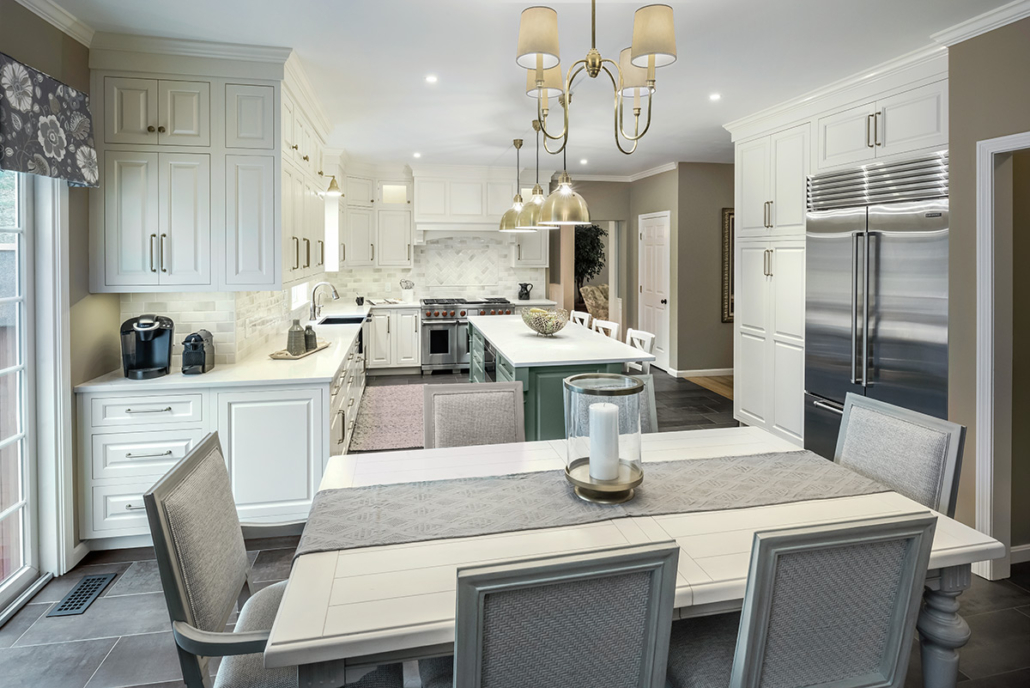
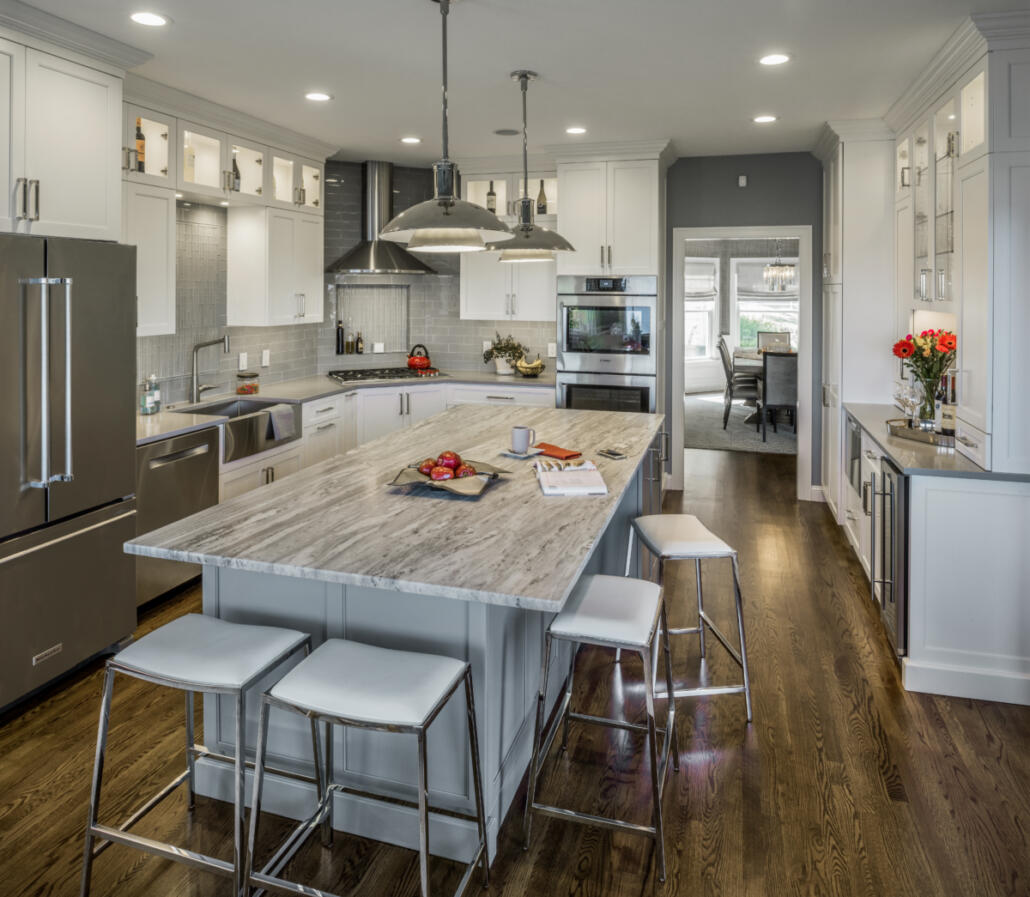
Adding more cabinetry isn’t always the best answer. A larger island or an extra bank of cabinets can create problems if it crowds walkways or interferes with appliance doors.
Review how drawers, cabinet doors, the refrigerator, and the dishwasher open in relation to one another. Consider whether two people can comfortably use the busiest parts of the kitchen at the same time.
In an existing North Kingstown home, windows, doorways, and adjacent rooms may influence what’s practical. Making better use of available cabinet space can be more helpful than trying to fill every wall.
Start Planning Your Kitchen With Wickford Kitchen & Bath
A useful kitchen storage plan starts with your daily routine. Knowing what you own, where you use it, and what currently gets in your way makes cabinet decisions easier.
Wickford Kitchen & Bath’s showroom is located at 8194 Post Road in North Kingstown, RI. Call (401) 294-4494 or schedule a design consultation to discuss cabinetry and storage options for your kitchen.