A mudroom often becomes the busiest entry point in the house, handling muddy boots, backpacks, dog leashes, and whatever else gets carried in from the Rhode Island weather. When it’s designed well, it catches the clutter before it spreads into the rest of the home. When it isn’t, it just becomes another pile-up spot near the door.
Designing a mudroom that actually works starts with understanding how your household uses that entry — not just what looks good in photos. Wickford Kitchen & Bath offers custom mudroom design built around cabinetry, cubbies, and hardware tailored to your home’s layout and routines.
Start With What Comes Through the Door
Before choosing cabinet styles, think through what actually enters your home on a daily basis. A household with young kids, multiple pets, and winter boots needs a different setup than one with fewer daily entries.
Give Every Family Member Their Own Zone
One of the most common mudroom frustrations is a single bench and a row of hooks that everyone has to share. Assigning a personal zone — a cubby, hook, or small locker — to each family member cuts down on the daily scramble to find a missing shoe or jacket.
Plan for Wet and Dirty Items Separately
Boots and wet outerwear need a different kind of storage than dry items like backpacks or dress coats. Building in a spot specifically for wet gear helps protect the rest of the space from tracked-in moisture and mud.
Add a Bench, But Make It Work Harder
A bench is a near-universal mudroom feature, and for good reason — it’s where boots go on and off. Building storage into the bench itself, rather than treating it as just a seat, adds function without taking up more floor space.
Connect the Mudroom to the Rest of the Home
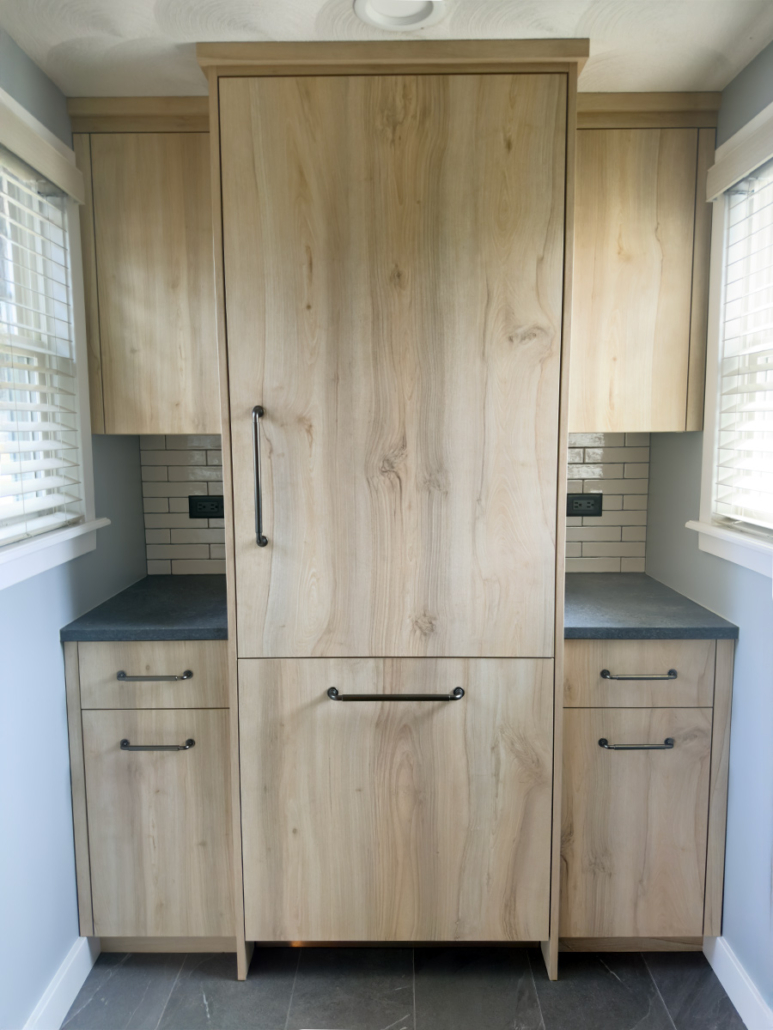
A mudroom rarely functions in isolation. If it connects to a kitchen or pantry, consider whether some overflow storage — like a spot for reusable bags or pet food — makes more sense near the entry than across the house. Designing the mudroom alongside adjacent spaces, rather than as a standalone project, often leads to a more functional result.
Build a Mudroom Around Your Household’s Routine
The best mudroom designs come from understanding how a household actually moves through the day, not from a single trending layout. Wickford Kitchen & Bath’s showroom is located at 8194 Post Road in North Kingstown, RI. Call (401) 294-4494 or schedule a design consultation to start planning a mudroom that fits your home.